01
API and integration architecture
Define system boundaries, contracts, identities, ownership and the right combination of synchronous APIs and asynchronous messages.
- REST and webhook contracts
- Middleware and adapters
- Versioning and compatibility
 KEEN SYSTEMSGet a Quote
Connect ERP, finance, ecommerce, booking, support, mobile and partner platforms through clear contracts, validated data flows, resilient messaging and operational visibility.
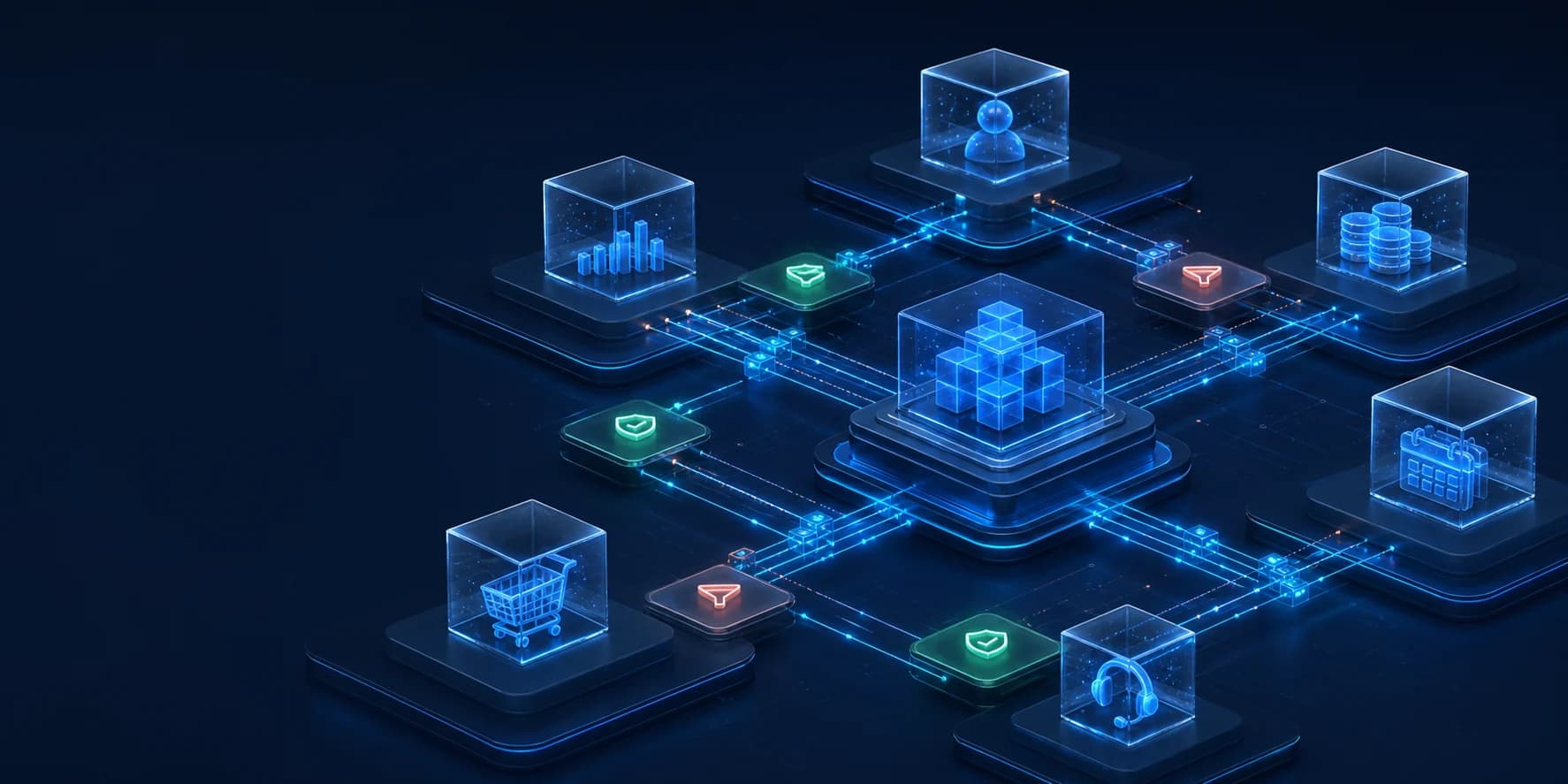
Integration is not simply transferring fields. It requires ownership, identity, mapping, timing, validation, permissions, failure handling, reconciliation and support. A professional integration makes these decisions explicit so connected platforms remain dependable as vendors and workflows evolve.
The final engagement can combine these areas or begin with a focused assessment and prioritised first stage.
Define system boundaries, contracts, identities, ownership and the right combination of synchronous APIs and asynchronous messages.
Translate records and events between platforms while preserving validation, transaction meaning and exception handling.
Protect credentials and data, trace exchanges, manage retries and provide operators with useful status and diagnostics.
Technology is evaluated against integration, maintainability, security, performance, data and support needs. A fashionable tool is not automatically the right operational choice.
Interface style is selected around latency, ownership, change control, data volume and the capabilities exposed by each connected platform.
Dedicated services isolate vendor details, apply mapping and validation, coordinate workflow and keep business systems from depending directly on unstable external formats.
Persistent integration state and messaging patterns support retries, deduplication, traceability and controlled asynchronous work.
Operational controls help teams answer what moved, what failed, whether retry is safe and which system owns the correction.
Review points keep scope, architecture, operational readiness and evidence visible throughout delivery.
Clarify the business outcome, users, current systems, constraints, risks, ownership and evidence required to call the work successful.
Turn the discovery findings into boundaries, modules, interfaces, milestones, quality expectations and an implementation path.
Build and validate working increments so stakeholders can examine behaviour, data, usability and operational readiness before release.
Prepare environments, monitoring, documentation, access, rollback expectations and support ownership before production use begins.
Use production evidence, user feedback and service indicators to prioritise improvements without losing architectural discipline.
A detailed, answer-ready guide for business owners, product teams, technical leaders and operators evaluating this service.
Direct answer: Before integration, teams should decide which system owns each business fact, which events trigger exchange, which rules apply, who resolves exceptions and how correctness will be verified.
A reliable integration begins with business ownership because technical connectivity cannot resolve conflicting definitions. In the context of Systems Integration, business boundaries and source of truth should be treated as an operating decision rather than an isolated technical task. The team needs to understand who depends on the result, which business event starts the workflow, what information is required, what can fail, and how a safe fallback should work. A strong approach connects these questions to a concrete outcome and makes assumptions visible before implementation gathers momentum. This is especially important when a platform must serve different roles, locations, devices, or levels of connectivity. The practical goal is not to maximise technical sophistication. It is to create a dependable capability that people can understand, operate, review, and improve as the surrounding business changes.
Map entities, identifiers, lifecycle, authorities, timing, reference data, approval points and the consequences of each system being unavailable. Planning for business boundaries and source of truth begins with evidence. Relevant evidence can include current screens, process notes, support records, data samples, integration documentation, observed user behaviour, service-level expectations, and the exceptions staff already handle manually. These inputs reveal where the written process differs from daily reality. During a Systems Integration engagement, the planning conversation should include business owners, operational users, technical maintainers, security stakeholders, and anyone responsible for the data crossing the boundary. Their perspectives are different, and that difference is useful. It helps the team separate mandatory rules from historical habits, identify decisions that require human approval, and agree which questions must be answered before the work moves into a production environment.
Document source-of-truth decisions, event vocabulary, responsibility boundaries and example transactions before finalising API or message design. Implementation should make the most important behaviour explicit. Interfaces need clear contracts, responsibilities need clear ownership, and state changes need a traceable path from input to outcome. For business boundaries and source of truth, this often means defining validation rules, permission boundaries, failure responses, observability signals, and acceptance examples alongside the main successful flow. The implementation can then be delivered in slices that demonstrate a complete path rather than a collection of disconnected components. Each slice should be reviewable by the people who understand the operation, testable by the delivery team, and supportable by the people who will own it later. That approach gives Systems Integration work a stable feedback loop and reduces the chance that hidden assumptions survive until the final release.
Risks include both systems editing the same fact, circular synchronisation, ambiguous identifiers, undocumented manual corrections and ownership that changes depending on the report. Risk management for business boundaries and source of truth is broader than preventing a visible error. Teams should consider incomplete data, duplicated requests, unavailable dependencies, unexpected user sequences, permission mistakes, slow responses, configuration drift, and changes introduced by external platforms. They should also consider the human impact of unclear warnings, excessive alerts, or automation that removes a useful review point. A sensible Systems Integration design does not pretend every failure can be eliminated. Instead, it limits the blast radius, preserves useful evidence, communicates the condition clearly, and provides a recovery path appropriate to the business impact. Documented assumptions and lightweight operational runbooks help future maintainers respond without having to rediscover the system while an incident is already in progress.
Evidence includes consistent ownership answers, fewer reconciliation disputes, traceable state transitions and exception queues routed to an accountable team. Measurement should show whether business boundaries and source of truth is improving the operation, not simply whether a component exists. Useful indicators may cover completion time, failure rate, manual correction, adoption, response time, deployment confidence, data accuracy, alert quality, recovery effort, or support volume, depending on the service. The baseline matters because a new system can appear active while producing little improvement. Reviews should combine quantitative signals with structured feedback from the people using and supporting the capability. For Systems Integration, the best measures remain connected to a decision: continue, adjust, simplify, automate further, or investigate. That decision-oriented view prevents dashboards from becoming decoration and creates a responsible way to prioritise the next improvement.
A maintainable approach to business boundaries and source of truth also needs documentation at the correct level. Business users need to know what the capability does, when it should be used, and what an exception means. Administrators need configuration guidance and permission context. Developers need architecture decisions, interface contracts, local setup information, test expectations, and release notes. Support teams need health signals, common failure patterns, escalation context, and safe diagnostic steps. These documents do not have to become a large static manual. They should live close to the workflow, remain versioned where appropriate, and be updated as part of meaningful change. In a long-lived Systems Integration platform, concise current guidance is more useful than an exhaustive document that no longer matches production.
Finally, business boundaries and source of truth should be reviewed as part of the wider service lifecycle. New products, staff roles, branches, policies, integrations, devices, and customer expectations can change the assumptions behind an earlier design. Periodic review helps the team decide whether to preserve, extend, replace, or retire a capability. It also provides a moment to remove unused permissions, simplify configuration, update dependencies, revise monitoring, test recovery paths, and check whether the original outcome is still relevant. This lifecycle perspective is one reason Keen Systems frames Systems Integration as an ongoing business capability rather than a one-off technical deliverable. The aim is a system that can be understood and changed deliberately, with the smallest reasonable amount of operational surprise.
Direct answer: A dependable API has clear resources or commands, stable meaning, validated inputs, explicit errors, appropriate authentication, versioning expectations, idempotency where required and documentation with realistic examples.
An API is a long-lived agreement between teams and systems, not merely a route that returns data. In the context of Systems Integration, api strategy and contract design should be treated as an operating decision rather than an isolated technical task. The team needs to understand who depends on the result, which business event starts the workflow, what information is required, what can fail, and how a safe fallback should work. A strong approach connects these questions to a concrete outcome and makes assumptions visible before implementation gathers momentum. This is especially important when a platform must serve different roles, locations, devices, or levels of connectivity. The practical goal is not to maximise technical sophistication. It is to create a dependable capability that people can understand, operate, review, and improve as the surrounding business changes.
Clarify consumers, latency, volume, consistency, compatibility, pagination, filtering, rate limits, permissions, error semantics and support ownership. Planning for api strategy and contract design begins with evidence. Relevant evidence can include current screens, process notes, support records, data samples, integration documentation, observed user behaviour, service-level expectations, and the exceptions staff already handle manually. These inputs reveal where the written process differs from daily reality. During a Systems Integration engagement, the planning conversation should include business owners, operational users, technical maintainers, security stakeholders, and anyone responsible for the data crossing the boundary. Their perspectives are different, and that difference is useful. It helps the team separate mandatory rules from historical habits, identify decisions that require human approval, and agree which questions must be answered before the work moves into a production environment.
Use contract-first examples where useful, validate at the boundary, keep errors actionable, separate internal models and test consumer-important behaviour. Implementation should make the most important behaviour explicit. Interfaces need clear contracts, responsibilities need clear ownership, and state changes need a traceable path from input to outcome. For api strategy and contract design, this often means defining validation rules, permission boundaries, failure responses, observability signals, and acceptance examples alongside the main successful flow. The implementation can then be delivered in slices that demonstrate a complete path rather than a collection of disconnected components. Each slice should be reviewable by the people who understand the operation, testable by the delivery team, and supportable by the people who will own it later. That approach gives Systems Integration work a stable feedback loop and reduces the chance that hidden assumptions survive until the final release.
Risks include exposing database structures, breaking optional fields, inconsistent status codes, unbounded responses, weak authentication and consumers depending on undocumented behaviour. Risk management for api strategy and contract design is broader than preventing a visible error. Teams should consider incomplete data, duplicated requests, unavailable dependencies, unexpected user sequences, permission mistakes, slow responses, configuration drift, and changes introduced by external platforms. They should also consider the human impact of unclear warnings, excessive alerts, or automation that removes a useful review point. A sensible Systems Integration design does not pretend every failure can be eliminated. Instead, it limits the blast radius, preserves useful evidence, communicates the condition clearly, and provides a recovery path appropriate to the business impact. Documented assumptions and lightweight operational runbooks help future maintainers respond without having to rediscover the system while an incident is already in progress.
Track contract changes, consumer failures, latency, error distribution, deprecated usage, documentation gaps and the time needed to diagnose a rejected request. Measurement should show whether api strategy and contract design is improving the operation, not simply whether a component exists. Useful indicators may cover completion time, failure rate, manual correction, adoption, response time, deployment confidence, data accuracy, alert quality, recovery effort, or support volume, depending on the service. The baseline matters because a new system can appear active while producing little improvement. Reviews should combine quantitative signals with structured feedback from the people using and supporting the capability. For Systems Integration, the best measures remain connected to a decision: continue, adjust, simplify, automate further, or investigate. That decision-oriented view prevents dashboards from becoming decoration and creates a responsible way to prioritise the next improvement.
A maintainable approach to api strategy and contract design also needs documentation at the correct level. Business users need to know what the capability does, when it should be used, and what an exception means. Administrators need configuration guidance and permission context. Developers need architecture decisions, interface contracts, local setup information, test expectations, and release notes. Support teams need health signals, common failure patterns, escalation context, and safe diagnostic steps. These documents do not have to become a large static manual. They should live close to the workflow, remain versioned where appropriate, and be updated as part of meaningful change. In a long-lived Systems Integration platform, concise current guidance is more useful than an exhaustive document that no longer matches production.
Finally, api strategy and contract design should be reviewed as part of the wider service lifecycle. New products, staff roles, branches, policies, integrations, devices, and customer expectations can change the assumptions behind an earlier design. Periodic review helps the team decide whether to preserve, extend, replace, or retire a capability. It also provides a moment to remove unused permissions, simplify configuration, update dependencies, revise monitoring, test recovery paths, and check whether the original outcome is still relevant. This lifecycle perspective is one reason Keen Systems frames Systems Integration as an ongoing business capability rather than a one-off technical deliverable. The aim is a system that can be understood and changed deliberately, with the smallest reasonable amount of operational surprise.
Direct answer: Data mapping should translate meaning, identity, format, units, status and required relationships explicitly, with validation and exception handling for records that cannot be converted safely.
Fields with similar labels may represent different rules, while one business concept may be split across several records in another platform. In the context of Systems Integration, data mapping, validation and reference data should be treated as an operating decision rather than an isolated technical task. The team needs to understand who depends on the result, which business event starts the workflow, what information is required, what can fail, and how a safe fallback should work. A strong approach connects these questions to a concrete outcome and makes assumptions visible before implementation gathers momentum. This is especially important when a platform must serve different roles, locations, devices, or levels of connectivity. The practical goal is not to maximise technical sophistication. It is to create a dependable capability that people can understand, operate, review, and improve as the surrounding business changes.
Compare schemas, samples, nullability, enumerations, codes, timezones, currencies, precision, lifecycle and the ownership of shared reference data. Planning for data mapping, validation and reference data begins with evidence. Relevant evidence can include current screens, process notes, support records, data samples, integration documentation, observed user behaviour, service-level expectations, and the exceptions staff already handle manually. These inputs reveal where the written process differs from daily reality. During a Systems Integration engagement, the planning conversation should include business owners, operational users, technical maintainers, security stakeholders, and anyone responsible for the data crossing the boundary. Their perspectives are different, and that difference is useful. It helps the team separate mandatory rules from historical habits, identify decisions that require human approval, and agree which questions must be answered before the work moves into a production environment.
Maintain versioned mapping rules, validation reports, reference lookups, transformation tests and a quarantine path for unsafe records. Implementation should make the most important behaviour explicit. Interfaces need clear contracts, responsibilities need clear ownership, and state changes need a traceable path from input to outcome. For data mapping, validation and reference data, this often means defining validation rules, permission boundaries, failure responses, observability signals, and acceptance examples alongside the main successful flow. The implementation can then be delivered in slices that demonstrate a complete path rather than a collection of disconnected components. Each slice should be reviewable by the people who understand the operation, testable by the delivery team, and supportable by the people who will own it later. That approach gives Systems Integration work a stable feedback loop and reduces the chance that hidden assumptions survive until the final release.
Risks include silent defaulting, loss of precision, timezone drift, unknown codes, partial relationships, truncation and mappings maintained only in an individual's spreadsheet. Risk management for data mapping, validation and reference data is broader than preventing a visible error. Teams should consider incomplete data, duplicated requests, unavailable dependencies, unexpected user sequences, permission mistakes, slow responses, configuration drift, and changes introduced by external platforms. They should also consider the human impact of unclear warnings, excessive alerts, or automation that removes a useful review point. A sensible Systems Integration design does not pretend every failure can be eliminated. Instead, it limits the blast radius, preserves useful evidence, communicates the condition clearly, and provides a recovery path appropriate to the business impact. Documented assumptions and lightweight operational runbooks help future maintainers respond without having to rediscover the system while an incident is already in progress.
Use acceptance rate, exception categories, manual corrections, reference-data mismatches, reconciliation totals and repeat failure after correction. Measurement should show whether data mapping, validation and reference data is improving the operation, not simply whether a component exists. Useful indicators may cover completion time, failure rate, manual correction, adoption, response time, deployment confidence, data accuracy, alert quality, recovery effort, or support volume, depending on the service. The baseline matters because a new system can appear active while producing little improvement. Reviews should combine quantitative signals with structured feedback from the people using and supporting the capability. For Systems Integration, the best measures remain connected to a decision: continue, adjust, simplify, automate further, or investigate. That decision-oriented view prevents dashboards from becoming decoration and creates a responsible way to prioritise the next improvement.
A maintainable approach to data mapping, validation and reference data also needs documentation at the correct level. Business users need to know what the capability does, when it should be used, and what an exception means. Administrators need configuration guidance and permission context. Developers need architecture decisions, interface contracts, local setup information, test expectations, and release notes. Support teams need health signals, common failure patterns, escalation context, and safe diagnostic steps. These documents do not have to become a large static manual. They should live close to the workflow, remain versioned where appropriate, and be updated as part of meaningful change. In a long-lived Systems Integration platform, concise current guidance is more useful than an exhaustive document that no longer matches production.
Finally, data mapping, validation and reference data should be reviewed as part of the wider service lifecycle. New products, staff roles, branches, policies, integrations, devices, and customer expectations can change the assumptions behind an earlier design. Periodic review helps the team decide whether to preserve, extend, replace, or retire a capability. It also provides a moment to remove unused permissions, simplify configuration, update dependencies, revise monitoring, test recovery paths, and check whether the original outcome is still relevant. This lifecycle perspective is one reason Keen Systems frames Systems Integration as an ongoing business capability rather than a one-off technical deliverable. The aim is a system that can be understood and changed deliberately, with the smallest reasonable amount of operational surprise.
Direct answer: Events and queues are useful when work can happen asynchronously, traffic needs buffering, producers and consumers should be decoupled, or reliable retry is more important than an immediate response.
Asynchronous design changes how completion, failure, ordering and user feedback must be understood. In the context of Systems Integration, events, queues and asynchronous workflows should be treated as an operating decision rather than an isolated technical task. The team needs to understand who depends on the result, which business event starts the workflow, what information is required, what can fail, and how a safe fallback should work. A strong approach connects these questions to a concrete outcome and makes assumptions visible before implementation gathers momentum. This is especially important when a platform must serve different roles, locations, devices, or levels of connectivity. The practical goal is not to maximise technical sophistication. It is to create a dependable capability that people can understand, operate, review, and improve as the surrounding business changes.
Define event meaning, delivery guarantees, ordering needs, retry policy, dead-letter handling, idempotency, retention, schema evolution and operator visibility. Planning for events, queues and asynchronous workflows begins with evidence. Relevant evidence can include current screens, process notes, support records, data samples, integration documentation, observed user behaviour, service-level expectations, and the exceptions staff already handle manually. These inputs reveal where the written process differs from daily reality. During a Systems Integration engagement, the planning conversation should include business owners, operational users, technical maintainers, security stakeholders, and anyone responsible for the data crossing the boundary. Their perspectives are different, and that difference is useful. It helps the team separate mandatory rules from historical habits, identify decisions that require human approval, and agree which questions must be answered before the work moves into a production environment.
Publish stable business events, include trace context, make consumers safely repeatable, monitor backlog and provide controlled replay or correction paths. Implementation should make the most important behaviour explicit. Interfaces need clear contracts, responsibilities need clear ownership, and state changes need a traceable path from input to outcome. For events, queues and asynchronous workflows, this often means defining validation rules, permission boundaries, failure responses, observability signals, and acceptance examples alongside the main successful flow. The implementation can then be delivered in slices that demonstrate a complete path rather than a collection of disconnected components. Each slice should be reviewable by the people who understand the operation, testable by the delivery team, and supportable by the people who will own it later. That approach gives Systems Integration work a stable feedback loop and reduces the chance that hidden assumptions survive until the final release.
Risks include duplicate effects, poison messages, hidden backlog, uncontrolled replay, assumptions of global order and events that expose internal implementation rather than business meaning. Risk management for events, queues and asynchronous workflows is broader than preventing a visible error. Teams should consider incomplete data, duplicated requests, unavailable dependencies, unexpected user sequences, permission mistakes, slow responses, configuration drift, and changes introduced by external platforms. They should also consider the human impact of unclear warnings, excessive alerts, or automation that removes a useful review point. A sensible Systems Integration design does not pretend every failure can be eliminated. Instead, it limits the blast radius, preserves useful evidence, communicates the condition clearly, and provides a recovery path appropriate to the business impact. Documented assumptions and lightweight operational runbooks help future maintainers respond without having to rediscover the system while an incident is already in progress.
Track queue age, throughput, retry distribution, dead letters, duplicate suppression, processing latency and time to resolve a stuck business transaction. Measurement should show whether events, queues and asynchronous workflows is improving the operation, not simply whether a component exists. Useful indicators may cover completion time, failure rate, manual correction, adoption, response time, deployment confidence, data accuracy, alert quality, recovery effort, or support volume, depending on the service. The baseline matters because a new system can appear active while producing little improvement. Reviews should combine quantitative signals with structured feedback from the people using and supporting the capability. For Systems Integration, the best measures remain connected to a decision: continue, adjust, simplify, automate further, or investigate. That decision-oriented view prevents dashboards from becoming decoration and creates a responsible way to prioritise the next improvement.
A maintainable approach to events, queues and asynchronous workflows also needs documentation at the correct level. Business users need to know what the capability does, when it should be used, and what an exception means. Administrators need configuration guidance and permission context. Developers need architecture decisions, interface contracts, local setup information, test expectations, and release notes. Support teams need health signals, common failure patterns, escalation context, and safe diagnostic steps. These documents do not have to become a large static manual. They should live close to the workflow, remain versioned where appropriate, and be updated as part of meaningful change. In a long-lived Systems Integration platform, concise current guidance is more useful than an exhaustive document that no longer matches production.
Finally, events, queues and asynchronous workflows should be reviewed as part of the wider service lifecycle. New products, staff roles, branches, policies, integrations, devices, and customer expectations can change the assumptions behind an earlier design. Periodic review helps the team decide whether to preserve, extend, replace, or retire a capability. It also provides a moment to remove unused permissions, simplify configuration, update dependencies, revise monitoring, test recovery paths, and check whether the original outcome is still relevant. This lifecycle perspective is one reason Keen Systems frames Systems Integration as an ongoing business capability rather than a one-off technical deliverable. The aim is a system that can be understood and changed deliberately, with the smallest reasonable amount of operational surprise.
Direct answer: ERP and financial integration must preserve transaction identity, amounts, tax meaning, posting state, reference data, approvals and reconciliation, with correction paths that respect accounting and operational controls.
Transactional integrations carry consequences beyond screen consistency because downstream records may affect stock, cash, liabilities or reporting. In the context of Systems Integration, erp, finance and transactional integrity should be treated as an operating decision rather than an isolated technical task. The team needs to understand who depends on the result, which business event starts the workflow, what information is required, what can fail, and how a safe fallback should work. A strong approach connects these questions to a concrete outcome and makes assumptions visible before implementation gathers momentum. This is especially important when a platform must serve different roles, locations, devices, or levels of connectivity. The practical goal is not to maximise technical sophistication. It is to create a dependable capability that people can understand, operate, review, and improve as the surrounding business changes.
Define posting boundaries, document numbers, currency and rounding, tax codes, branch and warehouse context, cancellation, reversal, partial completion and cut-off timing. Planning for erp, finance and transactional integrity begins with evidence. Relevant evidence can include current screens, process notes, support records, data samples, integration documentation, observed user behaviour, service-level expectations, and the exceptions staff already handle manually. These inputs reveal where the written process differs from daily reality. During a Systems Integration engagement, the planning conversation should include business owners, operational users, technical maintainers, security stakeholders, and anyone responsible for the data crossing the boundary. Their perspectives are different, and that difference is useful. It helps the team separate mandatory rules from historical habits, identify decisions that require human approval, and agree which questions must be answered before the work moves into a production environment.
Use idempotent transaction keys, validation before posting, immutable references where appropriate, explicit reversal flows and reconciliation reports agreed with business owners. Implementation should make the most important behaviour explicit. Interfaces need clear contracts, responsibilities need clear ownership, and state changes need a traceable path from input to outcome. For erp, finance and transactional integrity, this often means defining validation rules, permission boundaries, failure responses, observability signals, and acceptance examples alongside the main successful flow. The implementation can then be delivered in slices that demonstrate a complete path rather than a collection of disconnected components. Each slice should be reviewable by the people who understand the operation, testable by the delivery team, and supportable by the people who will own it later. That approach gives Systems Integration work a stable feedback loop and reduces the chance that hidden assumptions survive until the final release.
Risks include duplicate posting, silent amount differences, out-of-order cancellation, stale master data, partial stock movement and corrections made outside the documented process. Risk management for erp, finance and transactional integrity is broader than preventing a visible error. Teams should consider incomplete data, duplicated requests, unavailable dependencies, unexpected user sequences, permission mistakes, slow responses, configuration drift, and changes introduced by external platforms. They should also consider the human impact of unclear warnings, excessive alerts, or automation that removes a useful review point. A sensible Systems Integration design does not pretend every failure can be eliminated. Instead, it limits the blast radius, preserves useful evidence, communicates the condition clearly, and provides a recovery path appropriate to the business impact. Documented assumptions and lightweight operational runbooks help future maintainers respond without having to rediscover the system while an incident is already in progress.
Review balanced totals, unmatched references, duplicate prevention, posting latency, correction volume, period-end reconciliation effort and audit trace completeness. Measurement should show whether erp, finance and transactional integrity is improving the operation, not simply whether a component exists. Useful indicators may cover completion time, failure rate, manual correction, adoption, response time, deployment confidence, data accuracy, alert quality, recovery effort, or support volume, depending on the service. The baseline matters because a new system can appear active while producing little improvement. Reviews should combine quantitative signals with structured feedback from the people using and supporting the capability. For Systems Integration, the best measures remain connected to a decision: continue, adjust, simplify, automate further, or investigate. That decision-oriented view prevents dashboards from becoming decoration and creates a responsible way to prioritise the next improvement.
A maintainable approach to erp, finance and transactional integrity also needs documentation at the correct level. Business users need to know what the capability does, when it should be used, and what an exception means. Administrators need configuration guidance and permission context. Developers need architecture decisions, interface contracts, local setup information, test expectations, and release notes. Support teams need health signals, common failure patterns, escalation context, and safe diagnostic steps. These documents do not have to become a large static manual. They should live close to the workflow, remain versioned where appropriate, and be updated as part of meaningful change. In a long-lived Systems Integration platform, concise current guidance is more useful than an exhaustive document that no longer matches production.
Finally, erp, finance and transactional integrity should be reviewed as part of the wider service lifecycle. New products, staff roles, branches, policies, integrations, devices, and customer expectations can change the assumptions behind an earlier design. Periodic review helps the team decide whether to preserve, extend, replace, or retire a capability. It also provides a moment to remove unused permissions, simplify configuration, update dependencies, revise monitoring, test recovery paths, and check whether the original outcome is still relevant. This lifecycle perspective is one reason Keen Systems frames Systems Integration as an ongoing business capability rather than a one-off technical deliverable. The aim is a system that can be understood and changed deliberately, with the smallest reasonable amount of operational surprise.
Direct answer: Integration access should use dedicated identities, least-privilege permissions, protected credentials, clear rotation and revocation, secure transport and logs that identify the acting system without exposing secrets.
Machine identities often have broad unattended access, making their lifecycle and scope as important as human accounts. In the context of Systems Integration, identity, authentication and permissions should be treated as an operating decision rather than an isolated technical task. The team needs to understand who depends on the result, which business event starts the workflow, what information is required, what can fail, and how a safe fallback should work. A strong approach connects these questions to a concrete outcome and makes assumptions visible before implementation gathers momentum. This is especially important when a platform must serve different roles, locations, devices, or levels of connectivity. The practical goal is not to maximise technical sophistication. It is to create a dependable capability that people can understand, operate, review, and improve as the surrounding business changes.
Identify trust boundaries, credential owner, token lifetime, scopes, network exposure, data classification, rotation process, emergency revocation and vendor limitations. Planning for identity, authentication and permissions begins with evidence. Relevant evidence can include current screens, process notes, support records, data samples, integration documentation, observed user behaviour, service-level expectations, and the exceptions staff already handle manually. These inputs reveal where the written process differs from daily reality. During a Systems Integration engagement, the planning conversation should include business owners, operational users, technical maintainers, security stakeholders, and anyone responsible for the data crossing the boundary. Their perspectives are different, and that difference is useful. It helps the team separate mandatory rules from historical habits, identify decisions that require human approval, and agree which questions must be answered before the work moves into a production environment.
Store secrets outside source code, use scoped service accounts, validate tokens, restrict network paths where useful and separate test from production identities. Implementation should make the most important behaviour explicit. Interfaces need clear contracts, responsibilities need clear ownership, and state changes need a traceable path from input to outcome. For identity, authentication and permissions, this often means defining validation rules, permission boundaries, failure responses, observability signals, and acceptance examples alongside the main successful flow. The implementation can then be delivered in slices that demonstrate a complete path rather than a collection of disconnected components. Each slice should be reviewable by the people who understand the operation, testable by the delivery team, and supportable by the people who will own it later. That approach gives Systems Integration work a stable feedback loop and reduces the chance that hidden assumptions survive until the final release.
Risks include shared permanent credentials, production secrets in test tools, overly broad scopes, credentials in logs, unowned certificates and integration access that survives contract termination. Risk management for identity, authentication and permissions is broader than preventing a visible error. Teams should consider incomplete data, duplicated requests, unavailable dependencies, unexpected user sequences, permission mistakes, slow responses, configuration drift, and changes introduced by external platforms. They should also consider the human impact of unclear warnings, excessive alerts, or automation that removes a useful review point. A sensible Systems Integration design does not pretend every failure can be eliminated. Instead, it limits the blast radius, preserves useful evidence, communicates the condition clearly, and provides a recovery path appropriate to the business impact. Documented assumptions and lightweight operational runbooks help future maintainers respond without having to rediscover the system while an incident is already in progress.
Track credential age, scope reviews, failed authentication, rotation success, inactive identities, access exceptions and whether every integration identity has an owner. Measurement should show whether identity, authentication and permissions is improving the operation, not simply whether a component exists. Useful indicators may cover completion time, failure rate, manual correction, adoption, response time, deployment confidence, data accuracy, alert quality, recovery effort, or support volume, depending on the service. The baseline matters because a new system can appear active while producing little improvement. Reviews should combine quantitative signals with structured feedback from the people using and supporting the capability. For Systems Integration, the best measures remain connected to a decision: continue, adjust, simplify, automate further, or investigate. That decision-oriented view prevents dashboards from becoming decoration and creates a responsible way to prioritise the next improvement.
A maintainable approach to identity, authentication and permissions also needs documentation at the correct level. Business users need to know what the capability does, when it should be used, and what an exception means. Administrators need configuration guidance and permission context. Developers need architecture decisions, interface contracts, local setup information, test expectations, and release notes. Support teams need health signals, common failure patterns, escalation context, and safe diagnostic steps. These documents do not have to become a large static manual. They should live close to the workflow, remain versioned where appropriate, and be updated as part of meaningful change. In a long-lived Systems Integration platform, concise current guidance is more useful than an exhaustive document that no longer matches production.
Finally, identity, authentication and permissions should be reviewed as part of the wider service lifecycle. New products, staff roles, branches, policies, integrations, devices, and customer expectations can change the assumptions behind an earlier design. Periodic review helps the team decide whether to preserve, extend, replace, or retire a capability. It also provides a moment to remove unused permissions, simplify configuration, update dependencies, revise monitoring, test recovery paths, and check whether the original outcome is still relevant. This lifecycle perspective is one reason Keen Systems frames Systems Integration as an ongoing business capability rather than a one-off technical deliverable. The aim is a system that can be understood and changed deliberately, with the smallest reasonable amount of operational surprise.
Direct answer: Resilience comes from isolating vendor behaviour behind adapters, controlling timeouts and retries, validating assumptions, buffering where appropriate, monitoring dependency health and planning for contract change.
Connected systems may be slow, rate-limited, inconsistently documented or changed outside the integration team's control. In the context of Systems Integration, legacy and third-party platform resilience should be treated as an operating decision rather than an isolated technical task. The team needs to understand who depends on the result, which business event starts the workflow, what information is required, what can fail, and how a safe fallback should work. A strong approach connects these questions to a concrete outcome and makes assumptions visible before implementation gathers momentum. This is especially important when a platform must serve different roles, locations, devices, or levels of connectivity. The practical goal is not to maximise technical sophistication. It is to create a dependable capability that people can understand, operate, review, and improve as the surrounding business changes.
Record supported interfaces, vendor limits, maintenance windows, known failure modes, support channels, sandbox differences, change notice and alternatives for critical workflows. Planning for legacy and third-party platform resilience begins with evidence. Relevant evidence can include current screens, process notes, support records, data samples, integration documentation, observed user behaviour, service-level expectations, and the exceptions staff already handle manually. These inputs reveal where the written process differs from daily reality. During a Systems Integration engagement, the planning conversation should include business owners, operational users, technical maintainers, security stakeholders, and anyone responsible for the data crossing the boundary. Their perspectives are different, and that difference is useful. It helps the team separate mandatory rules from historical habits, identify decisions that require human approval, and agree which questions must be answered before the work moves into a production environment.
Use anti-corruption adapters, defensive parsing, bounded retries, circuit breakers where suitable, cached reference data and feature controls for uncertain dependencies. Implementation should make the most important behaviour explicit. Interfaces need clear contracts, responsibilities need clear ownership, and state changes need a traceable path from input to outcome. For legacy and third-party platform resilience, this often means defining validation rules, permission boundaries, failure responses, observability signals, and acceptance examples alongside the main successful flow. The implementation can then be delivered in slices that demonstrate a complete path rather than a collection of disconnected components. Each slice should be reviewable by the people who understand the operation, testable by the delivery team, and supportable by the people who will own it later. That approach gives Systems Integration work a stable feedback loop and reduces the chance that hidden assumptions survive until the final release.
Risks include endless retries, cascading resource exhaustion, vendor data accepted without validation, production-only behaviour, screen scraping and hidden dependence on deprecated endpoints. Risk management for legacy and third-party platform resilience is broader than preventing a visible error. Teams should consider incomplete data, duplicated requests, unavailable dependencies, unexpected user sequences, permission mistakes, slow responses, configuration drift, and changes introduced by external platforms. They should also consider the human impact of unclear warnings, excessive alerts, or automation that removes a useful review point. A sensible Systems Integration design does not pretend every failure can be eliminated. Instead, it limits the blast radius, preserves useful evidence, communicates the condition clearly, and provides a recovery path appropriate to the business impact. Documented assumptions and lightweight operational runbooks help future maintainers respond without having to rediscover the system while an incident is already in progress.
Track dependency latency, availability, throttling, timeout rate, fallback use, vendor incidents, contract changes and user impact attributable to the dependency. Measurement should show whether legacy and third-party platform resilience is improving the operation, not simply whether a component exists. Useful indicators may cover completion time, failure rate, manual correction, adoption, response time, deployment confidence, data accuracy, alert quality, recovery effort, or support volume, depending on the service. The baseline matters because a new system can appear active while producing little improvement. Reviews should combine quantitative signals with structured feedback from the people using and supporting the capability. For Systems Integration, the best measures remain connected to a decision: continue, adjust, simplify, automate further, or investigate. That decision-oriented view prevents dashboards from becoming decoration and creates a responsible way to prioritise the next improvement.
A maintainable approach to legacy and third-party platform resilience also needs documentation at the correct level. Business users need to know what the capability does, when it should be used, and what an exception means. Administrators need configuration guidance and permission context. Developers need architecture decisions, interface contracts, local setup information, test expectations, and release notes. Support teams need health signals, common failure patterns, escalation context, and safe diagnostic steps. These documents do not have to become a large static manual. They should live close to the workflow, remain versioned where appropriate, and be updated as part of meaningful change. In a long-lived Systems Integration platform, concise current guidance is more useful than an exhaustive document that no longer matches production.
Finally, legacy and third-party platform resilience should be reviewed as part of the wider service lifecycle. New products, staff roles, branches, policies, integrations, devices, and customer expectations can change the assumptions behind an earlier design. Periodic review helps the team decide whether to preserve, extend, replace, or retire a capability. It also provides a moment to remove unused permissions, simplify configuration, update dependencies, revise monitoring, test recovery paths, and check whether the original outcome is still relevant. This lifecycle perspective is one reason Keen Systems frames Systems Integration as an ongoing business capability rather than a one-off technical deliverable. The aim is a system that can be understood and changed deliberately, with the smallest reasonable amount of operational surprise.
Direct answer: Integration testing should validate contracts, transformations, permissions, retries, duplicates, ordering, partial failure and business reconciliation using representative data and controlled environments.
A successful HTTP response does not prove that the intended business outcome occurred correctly in every connected system. In the context of Systems Integration, integration testing and reconciliation should be treated as an operating decision rather than an isolated technical task. The team needs to understand who depends on the result, which business event starts the workflow, what information is required, what can fail, and how a safe fallback should work. A strong approach connects these questions to a concrete outcome and makes assumptions visible before implementation gathers momentum. This is especially important when a platform must serve different roles, locations, devices, or levels of connectivity. The practical goal is not to maximise technical sophistication. It is to create a dependable capability that people can understand, operate, review, and improve as the surrounding business changes.
Identify critical transaction examples, edge cases, volume, invalid inputs, duplicate delivery, unavailable dependencies, correction workflows and the totals or states that should reconcile. Planning for integration testing and reconciliation begins with evidence. Relevant evidence can include current screens, process notes, support records, data samples, integration documentation, observed user behaviour, service-level expectations, and the exceptions staff already handle manually. These inputs reveal where the written process differs from daily reality. During a Systems Integration engagement, the planning conversation should include business owners, operational users, technical maintainers, security stakeholders, and anyone responsible for the data crossing the boundary. Their perspectives are different, and that difference is useful. It helps the team separate mandatory rules from historical habits, identify decisions that require human approval, and agree which questions must be answered before the work moves into a production environment.
Combine unit tests for mapping, contract tests, sandbox integration, controlled end-to-end scenarios and post-run reconciliation with trace identifiers. Implementation should make the most important behaviour explicit. Interfaces need clear contracts, responsibilities need clear ownership, and state changes need a traceable path from input to outcome. For integration testing and reconciliation, this often means defining validation rules, permission boundaries, failure responses, observability signals, and acceptance examples alongside the main successful flow. The implementation can then be delivered in slices that demonstrate a complete path rather than a collection of disconnected components. Each slice should be reviewable by the people who understand the operation, testable by the delivery team, and supportable by the people who will own it later. That approach gives Systems Integration work a stable feedback loop and reduces the chance that hidden assumptions survive until the final release.
Risks include idealised test data, shared unstable sandboxes, destructive tests, missing negative cases, no verification in the destination and manual testing that cannot be repeated. Risk management for integration testing and reconciliation is broader than preventing a visible error. Teams should consider incomplete data, duplicated requests, unavailable dependencies, unexpected user sequences, permission mistakes, slow responses, configuration drift, and changes introduced by external platforms. They should also consider the human impact of unclear warnings, excessive alerts, or automation that removes a useful review point. A sensible Systems Integration design does not pretend every failure can be eliminated. Instead, it limits the blast radius, preserves useful evidence, communicates the condition clearly, and provides a recovery path appropriate to the business impact. Documented assumptions and lightweight operational runbooks help future maintainers respond without having to rediscover the system while an incident is already in progress.
Use contract pass rate, mapping defects, reconciliation variance, test reliability, production escape, correction effort and time required to locate the failing boundary. Measurement should show whether integration testing and reconciliation is improving the operation, not simply whether a component exists. Useful indicators may cover completion time, failure rate, manual correction, adoption, response time, deployment confidence, data accuracy, alert quality, recovery effort, or support volume, depending on the service. The baseline matters because a new system can appear active while producing little improvement. Reviews should combine quantitative signals with structured feedback from the people using and supporting the capability. For Systems Integration, the best measures remain connected to a decision: continue, adjust, simplify, automate further, or investigate. That decision-oriented view prevents dashboards from becoming decoration and creates a responsible way to prioritise the next improvement.
A maintainable approach to integration testing and reconciliation also needs documentation at the correct level. Business users need to know what the capability does, when it should be used, and what an exception means. Administrators need configuration guidance and permission context. Developers need architecture decisions, interface contracts, local setup information, test expectations, and release notes. Support teams need health signals, common failure patterns, escalation context, and safe diagnostic steps. These documents do not have to become a large static manual. They should live close to the workflow, remain versioned where appropriate, and be updated as part of meaningful change. In a long-lived Systems Integration platform, concise current guidance is more useful than an exhaustive document that no longer matches production.
Finally, integration testing and reconciliation should be reviewed as part of the wider service lifecycle. New products, staff roles, branches, policies, integrations, devices, and customer expectations can change the assumptions behind an earlier design. Periodic review helps the team decide whether to preserve, extend, replace, or retire a capability. It also provides a moment to remove unused permissions, simplify configuration, update dependencies, revise monitoring, test recovery paths, and check whether the original outcome is still relevant. This lifecycle perspective is one reason Keen Systems frames Systems Integration as an ongoing business capability rather than a one-off technical deliverable. The aim is a system that can be understood and changed deliberately, with the smallest reasonable amount of operational surprise.
Direct answer: Production integrations need ownership, health and business-flow monitoring, traceability, actionable alerts, retry and correction procedures, change governance and regular review of contracts and credentials.
Integration failures often sit between team boundaries, so support needs a shared view of evidence and responsibility. In the context of Systems Integration, monitoring, support and integration governance should be treated as an operating decision rather than an isolated technical task. The team needs to understand who depends on the result, which business event starts the workflow, what information is required, what can fail, and how a safe fallback should work. A strong approach connects these questions to a concrete outcome and makes assumptions visible before implementation gathers momentum. This is especially important when a platform must serve different roles, locations, devices, or levels of connectivity. The practical goal is not to maximise technical sophistication. It is to create a dependable capability that people can understand, operate, review, and improve as the surrounding business changes.
Define service owners, escalation, dashboards, alert actions, business reconciliation, support hours, vendor contacts, replay authority, maintenance and deprecation policy. Planning for monitoring, support and integration governance begins with evidence. Relevant evidence can include current screens, process notes, support records, data samples, integration documentation, observed user behaviour, service-level expectations, and the exceptions staff already handle manually. These inputs reveal where the written process differs from daily reality. During a Systems Integration engagement, the planning conversation should include business owners, operational users, technical maintainers, security stakeholders, and anyone responsible for the data crossing the boundary. Their perspectives are different, and that difference is useful. It helps the team separate mandatory rules from historical habits, identify decisions that require human approval, and agree which questions must be answered before the work moves into a production environment.
Provide correlation search, transaction status, queue health, dependency indicators, runbooks, controlled replay tools and versioned interface documentation. Implementation should make the most important behaviour explicit. Interfaces need clear contracts, responsibilities need clear ownership, and state changes need a traceable path from input to outcome. For monitoring, support and integration governance, this often means defining validation rules, permission boundaries, failure responses, observability signals, and acceptance examples alongside the main successful flow. The implementation can then be delivered in slices that demonstrate a complete path rather than a collection of disconnected components. Each slice should be reviewable by the people who understand the operation, testable by the delivery team, and supportable by the people who will own it later. That approach gives Systems Integration work a stable feedback loop and reduces the chance that hidden assumptions survive until the final release.
Risks include technical health without business completion, alerts sent to nobody, unsafe manual replay, undocumented vendor changes and failed records accumulating outside an owned queue. Risk management for monitoring, support and integration governance is broader than preventing a visible error. Teams should consider incomplete data, duplicated requests, unavailable dependencies, unexpected user sequences, permission mistakes, slow responses, configuration drift, and changes introduced by external platforms. They should also consider the human impact of unclear warnings, excessive alerts, or automation that removes a useful review point. A sensible Systems Integration design does not pretend every failure can be eliminated. Instead, it limits the blast radius, preserves useful evidence, communicates the condition clearly, and provides a recovery path appropriate to the business impact. Documented assumptions and lightweight operational runbooks help future maintainers respond without having to rediscover the system while an incident is already in progress.
Review completion rate, backlog age, mean diagnosis, replay success, unresolved exceptions, contract currency, alert quality and stakeholder confidence in reconciliation. Measurement should show whether monitoring, support and integration governance is improving the operation, not simply whether a component exists. Useful indicators may cover completion time, failure rate, manual correction, adoption, response time, deployment confidence, data accuracy, alert quality, recovery effort, or support volume, depending on the service. The baseline matters because a new system can appear active while producing little improvement. Reviews should combine quantitative signals with structured feedback from the people using and supporting the capability. For Systems Integration, the best measures remain connected to a decision: continue, adjust, simplify, automate further, or investigate. That decision-oriented view prevents dashboards from becoming decoration and creates a responsible way to prioritise the next improvement.
A maintainable approach to monitoring, support and integration governance also needs documentation at the correct level. Business users need to know what the capability does, when it should be used, and what an exception means. Administrators need configuration guidance and permission context. Developers need architecture decisions, interface contracts, local setup information, test expectations, and release notes. Support teams need health signals, common failure patterns, escalation context, and safe diagnostic steps. These documents do not have to become a large static manual. They should live close to the workflow, remain versioned where appropriate, and be updated as part of meaningful change. In a long-lived Systems Integration platform, concise current guidance is more useful than an exhaustive document that no longer matches production.
Finally, monitoring, support and integration governance should be reviewed as part of the wider service lifecycle. New products, staff roles, branches, policies, integrations, devices, and customer expectations can change the assumptions behind an earlier design. Periodic review helps the team decide whether to preserve, extend, replace, or retire a capability. It also provides a moment to remove unused permissions, simplify configuration, update dependencies, revise monitoring, test recovery paths, and check whether the original outcome is still relevant. This lifecycle perspective is one reason Keen Systems frames Systems Integration as an ongoing business capability rather than a one-off technical deliverable. The aim is a system that can be understood and changed deliberately, with the smallest reasonable amount of operational surprise.
Real projects that demonstrate relevant workflow or technology experience.
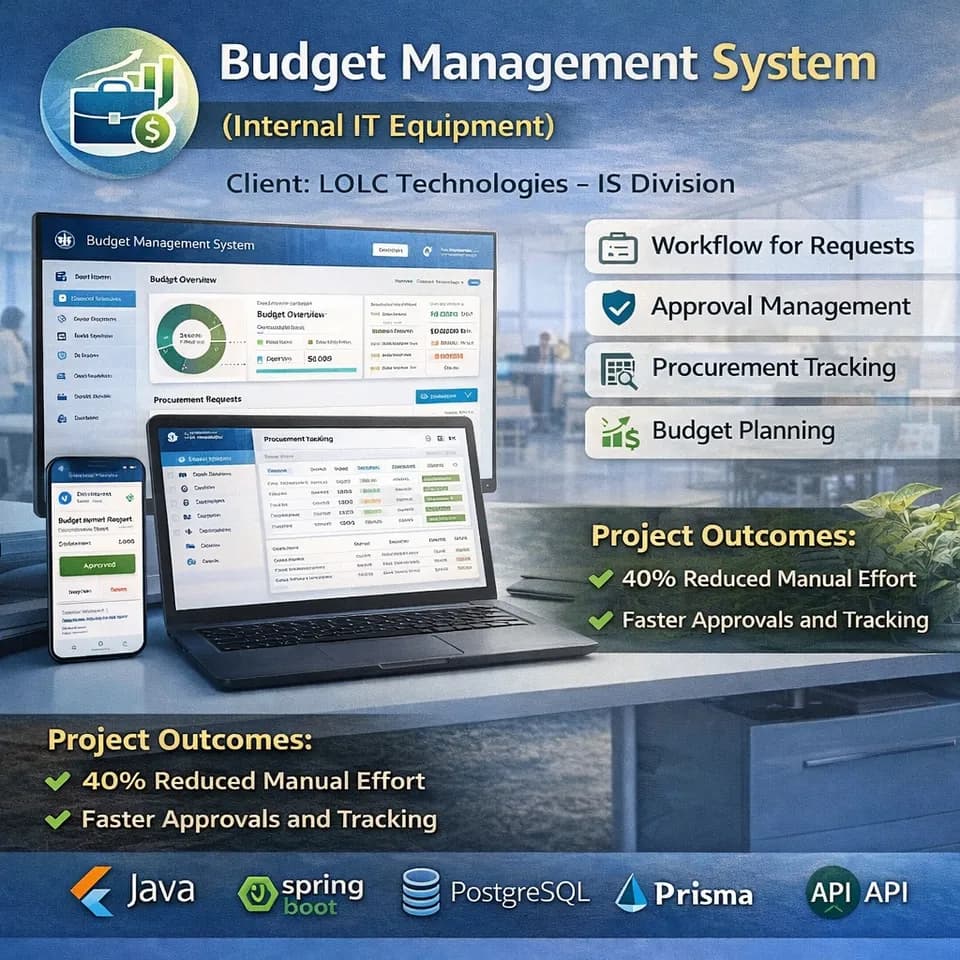
A workflow platform supporting requests, approvals, procurement tracking and budget planning through REST-based services.
A connected booking and support module handling schedules, patient records, cancellation and operational access.
Concise answers to common planning, scope and operating questions.
Often, yes. The approach depends on the ERP's supported APIs, data model, permissions, vendor policy and transaction rules. Discovery should confirm safe integration boundaries before implementation.
Options may include supported file exchange, database views approved by the owner, vendor-provided connectors or a process change. Screen scraping is fragile and should be treated cautiously.
Yes, when the connected systems and business need support it. Real-time may use APIs, webhooks or events. Some workflows are safer and more economical as controlled batches.
The design can use bounded retries, idempotency, dead-letter or exception queues, operator visibility and controlled correction or replay according to the transaction risk.
Stable identifiers, idempotency keys, ownership rules, deduplication checks and reconciliation are common controls. The exact combination depends on the transaction and systems.
Yes. Integration commonly exists to preserve valuable systems while creating a controlled information flow or new user experience around them.

Bespoke web, mobile and internal platforms designed around the way your organisation operates.
View service
Cloud foundations, automated delivery pipelines, containers, observability and production controls.
View service
Monitoring, incident response, updates, performance work and continuous care for production applications.
View serviceShare the system context, users, current constraints and outcome you want to improve. The first conversation can focus on the most useful next step.